
CVT Whining Noise Repair Options, How We Identify Bearings vs Pump Noise
Hear a CVT whining noise that rises with speed? Learn how we tell bearing whine from oil pump noise, the tests we run, and your best repair options in NZ.

March 09, 2026
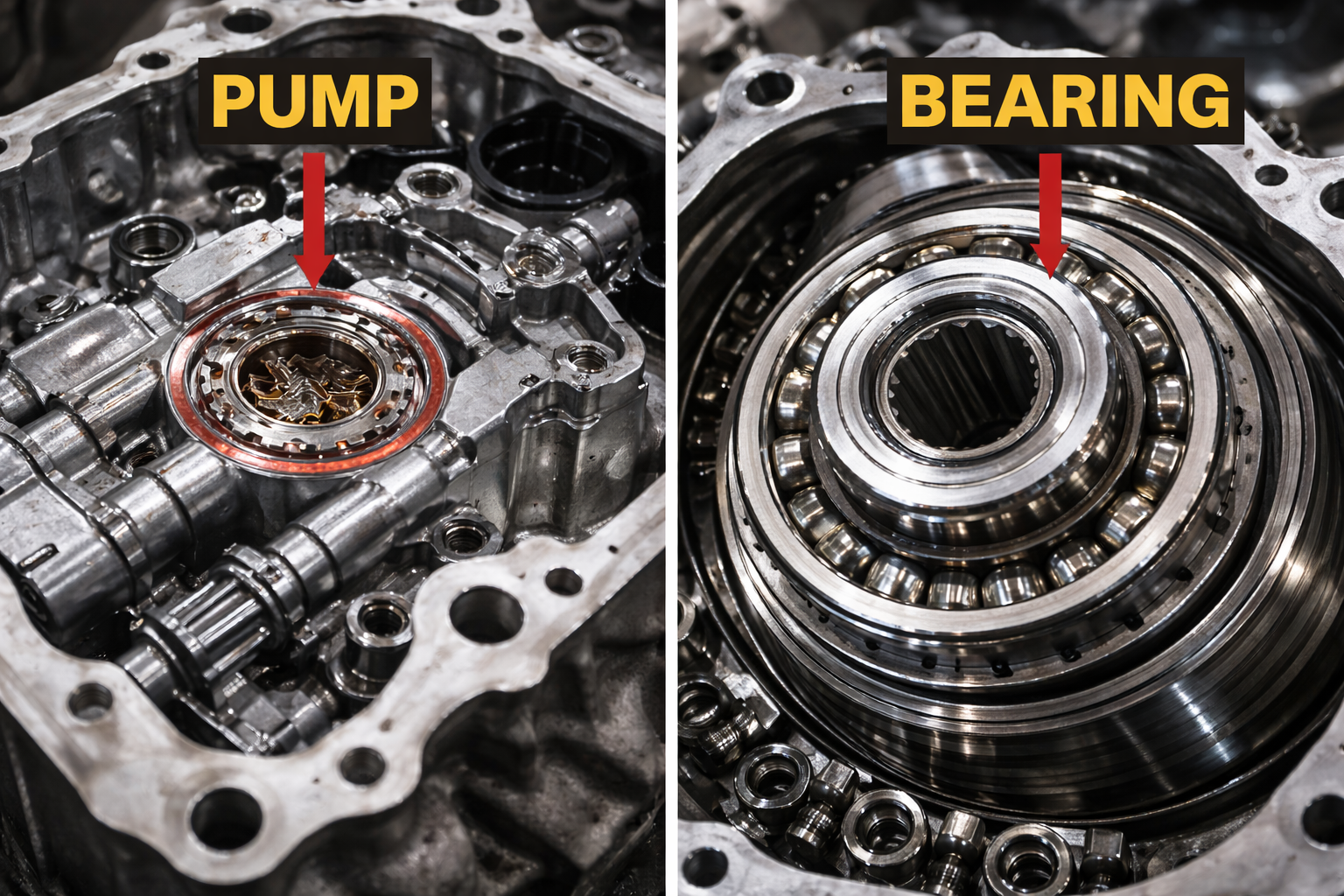
Table of contents
CVT Whining Noise Repair Options: How We Identify Bearings vs Pump Noise
A whining CVT can be tricky because several parts can create a similar “supercharger” style sound. The key is working out whether the noise is tied to vehicle speed (often bearings, final drive, pulleys) or engine rpm and hydraulic demand (often pump and pressure-related issues). CVT fluid condition matters too, because poor fluid can change both bearing lubrication and pump behaviour.
This guide breaks down how we isolate the noise, what the most likely causes are, and what repair options actually make sense depending on what we find.
First, is the whining definitely the CVT?
Before we point fingers at the gearbox, we rule out common lookalikes because misdiagnosis is expensive.
We’ll typically check:
- Wheel bearings and driveline bearings (noise that follows road speed can be outside the transmission, too)
- Tyre noise (pattern wear can “sing” at certain speeds)
- Contact or vibration points (exhaust shields, mounts, undertrays)
- Whether the sound is considered normal for that model when compared with a known-good vehicle
Some manufacturers even note that a slight whine at idle or on light acceleration can be normal on certain vehicles, and may come from the CVT oil pump or other engine-driven pumps, so we treat “whine” as a symptom that needs proper isolation, not an instant rebuild verdict.
The quick way we separate bearing noise from pump noise
1) Does it follow road speed or engine rpm?
This is one of the biggest clues.
More likely bearings (or final drive) if:
- The whine rises with vehicle speed, even if engine rpm changes
- It is strongest at steady cruise
- It becomes more noticeable over weeks or months
More likely pump or pressure-related if:
- The pitch rises with engine rpm, even when you are not moving
- It changes with hydraulic load and line pressure demands
2) Neutral and stationary checks
A useful workshop trick is testing conditions that remove the “in motion” variables.
- If the noise can be produced while the engine is stationary and changes with rpm, that pushes suspicion toward the pump or other engine-driven components.
- If the noise is only present when the vehicle is moving, we look more closely at the bearings, final drive, pulleys, and driveline.
3) Reverse can make the pump noise more obvious
Many transmissions command higher line pressure in Reverse. If the whine noticeably changes in Reverse while the vehicle is stationary, that can support a pump or pressure-related direction, though you still need to confirm with further tests.
4) Ratio change test to pinpoint which bearing area
On common Jatco CVTs, a proven isolation method is driving at the speed where the whine is loudest, then forcing a ratio change so the engine speed increases.
- If the whine increases with the rpm rise, it can point more toward the primary pulley bearing area
- If the whine stays about the same while rpm changes, it can point more toward the secondary pulley or final drive bearing area
What we check next, before recommending repairs
CVT fluid condition and contamination
CVTs are extremely fluid-dependent. Fluid affects lubrication, cooling, and hydraulic control, so degraded or incorrect fluid can create or worsen whining symptoms.
We inspect:
- Fluid level and smell (burnt odour can suggest overheating)
- Colour and clarity
- Magnet and pan debris
- Filter condition where applicable
If we see heavy metallic contamination, the “repair options” conversation changes quickly, because ongoing operation can spread damage through the unit.
Scan data and pressure behaviour
If symptoms suggest pump or pressure problems, we’ll look at fault codes and live data that support (or rule out) pressure control issues, especially where the vehicle is showing oil pressure faults or overheat warnings.
Pinpoint listening (chassis ears)
When the noise is hard to locate, we use targeted listening to separate where the sound is physically strongest (case area, pump zone, final drive area). This can also help differentiate CVT noise from non-transmission sources.
Bearing whine, what it usually sounds like and why it happens
CVT bearing noise is commonly described as a smooth whine, hum, or growl that builds with speed and tends to worsen over time. In many Jatco units, rotational whining noise in Forward or Reverse is a known bearing-related complaint.
Typical causes include:
- Normal wear plus heat and load over time
- Fluid breakdown or incorrect servicing
- Contamination that accelerates surface wear
If caught early, you may still have options that avoid a full replacement, but it depends on how far the wear has progressed and what we find in the fluid and filters.
Pump whine, what it suggests and why it matters
A pump-related whine is usually more tied to rpm and pressure demand than road speed. One practical diagnostic approach is to make the pump “work harder” and see if the sound changes with those load and pressure conditions.
Pump or pressure-related issues can also come with other signs, like overheating, pressure faults, or belt slip behaviour if the unit cannot maintain stable pressure.
Repair options we commonly recommend, depending on what we find
Option A: Fluid and filter service (when it is genuinely serviceable)
Best fit when:
- The whine is mild
- Fluid is old or incorrect, but there is no heavy metal contamination
- No major pressure faults, no persistent overheating
A correct service can stabilise pressure control and reduce noise that is driven by degraded fluid behaviour, but it will not “heal” a damaged bearing or a failing pump.
Helpful related guide:
What is CVT Fluid, When to Change it & Why it Matters
Option B: Targeted internal repair (bearings or pump-related components)
Best fit when:
- Testing clearly isolates the noise source
- The rest of the transmission checks out
- Contamination is limited, and the wear is contained
On some units, a targeted repair can be the most cost-effective path, but it must be based on good diagnosis. CVT bearing noise, in particular, is a common complaint in certain Jatco models and requires careful isolation to avoid replacing the wrong thing.
Option C: Full rebuild
Best fit when:
- Noise is loud or rapidly worsening
- There is visible metal debris or burnt fluid
- There are multiple symptoms (whine plus slip, surging, ratio errors, overheating, pressure codes)
A rebuild makes sense when we see evidence that wear has spread beyond a single component.
Option D: Replacement CVT supply and installation
Best fit when:
- Internal damage is extensive
- The unit has progressed past economical repair
- The vehicle needs a faster, more predictable turnaround option
CVT NZ focuses exclusively on CVTs and offers diagnostics, repairs, servicing, supply, installation, and warranty-backed solutions, so we’ll recommend the path that best matches the condition of the unit and the customer’s priorities.
What you should do if your CVT is whining right now
A few practical steps that protect your options:
- Avoid heavy acceleration and towing until checked. Added load means added heat
- Do not let a service shop top up with standard ATF; CVTs require the correct specified CVT fluid
- Book a diagnosis sooner rather than later; early bearing or pressure issues are where you still have the most choices
If you want a quick starting point before calling, use our symptom tool and select your brand plus “whining noise” to see what it commonly points to
FAQs
Is a CVT whining noise always serious?
Not always. Some vehicles have a mild, steady whine that can be considered normal, especially at idle or light load. The concern is when the whine is new, getting louder, or comes with other symptoms like shuddering, slipping, overheating, delayed engagement, or warning lights.
What does a CVT bearing whine usually sound like?
Bearing whine is often a smooth, rising “aircraft” or “supercharger” style sound that tends to follow road speed more than engine rpm. It commonly becomes more noticeable over time and may be worse at certain speeds.
What does CVT pump noise sound like?
Pump noise is more likely to change with engine rpm and hydraulic demand. It can be more noticeable when line pressure is higher (for example, in Reverse on some vehicles), and it may vary when the transmission is commanding higher pressure.
Why does the whine get louder when I accelerate?
Acceleration increases load and often increases hydraulic demand, so both bearings and pump-related issues can become louder. The key is whether the pitch follows vehicle speed (bearings and final drive more likely) or engine rpm (pump and pressure-related more likely).
Can a CVT fluid change fix a whining noise?
Sometimes it can reduce noise if the problem is mainly a fluid condition, incorrect fluid, low fluid, or minor pressure instability. But it will not repair a worn bearing or a failing pump. If there is metal debris or burnt fluid, servicing alone is usually not the right answer.
Why is the whine worse at a specific speed, like 50 to 80 km/h?
That pattern often points to a rotating component resonance or a bearing area that becomes most audible at a certain shaft speed. Workshops will typically test at the “loudest speed” and then change the ratio or load to see whether the sound tracks rpm or road speed.
Why does it whine more in Reverse?
Many transmissions command higher line pressure in Reverse, which can make pressure-related noises more noticeable. It can also highlight internal wear that is less obvious in Drive. It is a helpful clue, but still needs confirmation with proper testing.
Is it safe to keep driving with a CVT whine?
If it is mild and unchanged, you may be able to drive short-term, but it is still worth checking. If it is getting louder, or you have slipping, shuddering, overheat messages, or warning lights, driving can quickly turn a repairable issue into a full rebuild or replacement.
Can wheel bearings sound like a CVT whine?
Yes, and it is common. Wheel bearings usually follow road speed and often change when you load the vehicle side to side (gentle lane change). That is why a proper diagnosis checks non-transmission sources before internal CVT work.
What will you typically check in a CVT whine diagnosis?
Common steps include:
- Road test to reproduce the noise consistently
- Stationary rpm checks to separate rpm-related noises
- Fluid inspection for contamination and condition
- Scan for codes and live data patterns
- Targeted listening to locate where the sound is strongest
Ratio and load tests to isolate bearing areas on common CVT designs
What are the repair options once you know it is bearings?
If the noise is confirmed as internal bearing-related, options usually include a targeted internal repair (where appropriate) or a full rebuild, depending on contamination and how far the wear has progressed.
What are the repair options if it is pump noise?
If the diagnosis supports pump or pressure-related noise, the repair may involve addressing pump wear, pressure control issues, or related components. The right path depends on scan data, fluid condition, and whether there is evidence of broader internal wear.
- By
- CVT Team
Share this post