
CVT Pulley Wear: Early Warning Signs and What They Mean
Learn the early warning signs of CVT pulley wear, including whining, judder, surging, RPM flare and metal in the fluid. Know what to check and when to book a diagnosis.

February 26, 2026
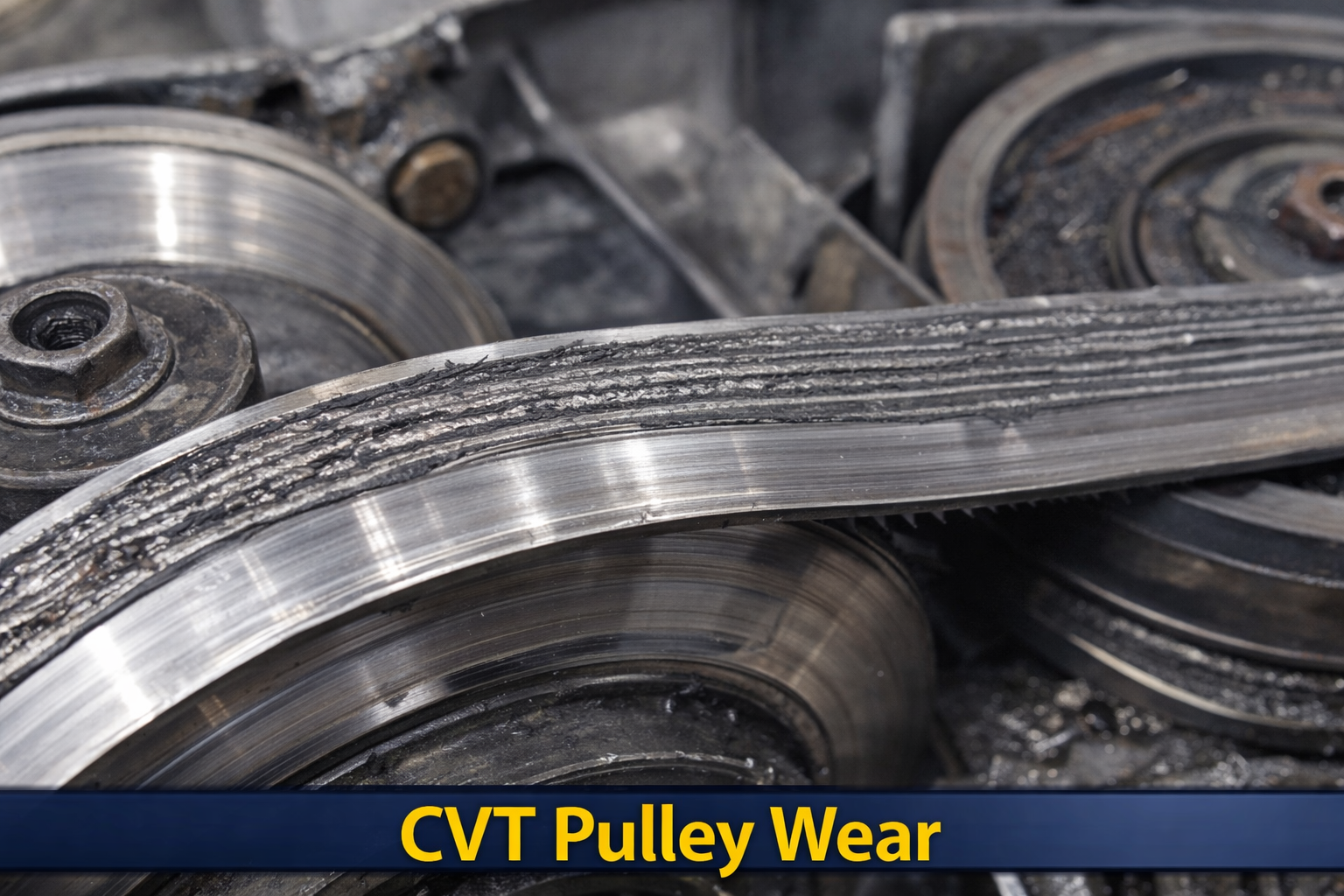
Table of contents
CVT Pulley Wear: Early Warning Signs (and what to do next)
CVT pulley wear is one of those CVT problems that can sneak up on you. The vehicle might still drive “fine”, but small changes in sound, feel, and CVT fluid condition can be early clues that the pulley faces or bearings are starting to deteriorate. Catching it early can mean a simpler repair, less collateral damage, and a better chance of saving the transmission.
Below are the most common early warning signs, why they happen, and what checks help confirm the cause.
What the secondary pulley does (quick overview)
In most belt and chain CVTs, the Primary and secondary pulley working together to continuously vary the ratio. The belt rides up and down the pulley faces depending on load and speed. The secondary pulley also plays a big role in maintaining belt tension, managing torque transfer, and stabilising ratio changes under acceleration and deceleration because this pulley is spring-loaded
When the pulleys starts to wear, it can affect belt grip, alignment, and smoothness. That shows up as noise, judder, heat, and abnormal metal contamination in the fluid.
Early warning signs of pulley wear
1) Whining, howling, or a “supercharger” noise that rises with road speed
A high-pitched whine that changes with speed can be an early indicator of pulley or bearing wear. If the noise is most noticeable at steady cruising and becomes louder over time, it is worth investigating.
Why it happens: worn pulley bearings or damaged pulley surfaces can create a consistent harmonic noise under load.

2) Judder or shudder on light acceleration
If the vehicle shakes or “chatters” when pulling away gently or accelerating slightly, the belt may not be gripping smoothly.
Why it happens: pulley face wear, glazing, or uneven contact can cause microslip. That slip turns into heat, and heat accelerates wear.
Note: judder can also come from fluid issues, torque converter lock-up shudder (where fitted), or engine misfire. The pattern matters; CVT judder often feels ratio-related rather than engine RPM flare.
3) Surging or “hunting” at steady throttle
A common early complaint is the car feeling like it cannot settle, tiny ratio changes, a subtle surge, or an on-off pull when you hold your foot steady.
Why it happens: pulley wear can lead to unstable ratio control. The transmission control system reacts to slip or inconsistent feedback by constantly adjusting pressure and ratio.
4) RPM flare or delayed engagement under load
You press the throttle, and RPM rises more than expected before road speed follows. Or the car feels slow to “take up” drive when you select D or R, especially when hot.
Why it happens: poor belt grip, secondary pulley pressure loss, or internal leakage can reduce clamping force. If the pulley assembly is worn, it can struggle to maintain consistent tension.
5) Vibration, rumble, or harshness on deceleration
A worn pulley set can show up on overrun, slowing down, or gentle downhill driving. Some drivers describe it as a rumble strip feeling.
Why it happens: as the belt travels across the pulley faces during ratio change, worn surfaces can create uneven belt contact and vibration.
6) Heat-related symptoms that get worse after a longer drive
Problems that are mild cold and noticeably worse when the CVT is hot are a big clue. Examples include stronger judder, louder whining, or worse surge after 20 to 40 minutes of driving.
Why it happens: heat thins the fluid and reduces the safety margin for pressure control and belt grip. If the pulley faces are already compromised, the symptoms intensify.
7) Metallic glitter in the CVT fluid, or magnetic plug “fuzz” that looks excessive
If the CVT fluid shows a noticeable metallic sheen, or the magnet has heavy buildup between services, take it seriously.
Why it happens: pulley face and bearing wear produces fine metal particles. Some light paste on the magnet can be normal, heavy accumulation, flakes, or shiny glitter is not.
8) Diagnostic trouble codes and pressure-related data out of range
Not every vehicle will throw a code early, but some will log ratio errors, slip, pressure control issues, or over-temperature events.
Why it happens: the control module is detecting a mismatch between the commanded ratio and actual ratio, or it is having to push pressure harder than expected to maintain control.
What commonly causes pulley wear
- Incorrect CVT fluid (wrong spec or universal fluid that does not match the unit’s requirements)
- Old or degraded fluid, especially in stop-start driving, hills, towing, or hot conditions
- Overheating, including blocked coolers, restricted lines, or repeated high-load driving
- Delayed servicing after early symptoms begin, allowing the belt slip to continue
- Contamination from previous internal wear that was not fully flushed out
How to confirm it (without guessing)
If you suspect pulley wear, these checks help narrow it down:
- Road test with a scan tool
Monitor ratio command vs actual, CVT temperature, pressure control behaviour, and slip indicators where supported. - Fluid inspection and magnet check
Look for glitter, burnt smell, dark fluid, and the quantity and type of debris on the magnet. - Noise localisation
A consistent whine related to road speed and load, especially when hot, points more towards rotating components than engine issues. - Borescope or teardown inspection (when justified)
Ultimately, pulley face damage is a physical wear issue; the most reliable confirmation is visual inspection.
How to confirm it (without guessing)
If you suspect pulley wear, these checks help narrow it down:
- Road test with a scan tool
Monitor ratio command vs actual, CVT temperature, pressure control behaviour, and slip indicators where supported. - Fluid inspection and magnet check
Look for glitter, burnt smell, dark fluid, and the quantity and type of debris on the magnet. - Noise localisation
A consistent whine related to road speed and load, especially when hot, points more towards rotating components than engine issues. - Borescope or teardown inspection (when justified)
Ultimately, pulley face damage is a physical wear issue; the most reliable confirmation is visual inspection.

What to do if you catch it early
- Stop hard driving and avoid towing until it is diagnosed
- Do not keep “driving through” judder or slip, as it can destroy the belt and pulley surfaces quickly
- Service with the correct fluid spec (only if the unit is still operating normally and contamination is not severe)
- Check cooling performance, overheated CVTs fail fast
- Get a specialist diagnosis, particularly if you see metal glitter, hear a worsening whine, or have heat related flare
If the transmission is already producing heavy metal contamination, a simple fluid change may not be enough, and can sometimes expose an already failing unit. The right call depends on symptoms, debris level, and scan data.
Quick checklist: when to book it in urgently
Book it in sooner rather than later if you notice any of the following:
- Whine/howl that is getting louder week to week
- Judder on take off or light throttle
- Surging/hunting at a steady speed
- RPM flare under load, especially when hot
- Metallic glitter in fluid or heavy magnet debris
- Over-temperature events or ratio-related fault codes
Final thoughts
CVT pulley wear rarely fixes itself. Once the belt starts slipping, or the pulley faces begin shedding metal, the problem usually gets worse over time. That is why early diagnosis is often the best value, when symptoms are still mild. If it is left to continue, pulley wear can lead to wider internal damage, including the belt, valve body, bearings, and even the pump.
If you are hearing a growing whine, feeling a light throttle judder, or seeing metallic “glitter” in the CVT fluid, treat it as an early warning. Reduce load and avoid hard acceleration until it has been checked. A proper scan, plus a fluid and magnet inspection and a cooling system check, will usually show whether it is a serviceable issue or the start of an internal wear failure. Catching pulley wear early can be the difference between a targeted repair and a full rebuild or replacement.
One extra note, not every CVT sensation is a fault. Some smaller CVT transmissions, such as those used in the Suzuki Swift, Nissan Juke, and Nissan Pulsar, can show a brief “flare” or change in feel at around 50 km/h. This can be normal in certain CVT7 setups that use two ratio ranges, where the transmission transitions from the low range to the high range.
Remember that all CVT transmissions are electronically controlled. So when a CVT Transmission has been replaced or Repaired the TCU has to be reset and sometimes reprogrammed, which can cause a different drive pattern. This will slowly disappear because the transmission will adapt slowly to the owners drive style (called the adaptation process).
How noticeable it feels depends a lot on driving style. With gentle throttle and smooth inputs, you may barely notice it. A simple way to reduce the flare is to be light and consistent on the throttle through that speed range, then increase power once the shift has completed. If you want more detail on driving technique, follow the guidance on How to Drive a CVT Safely and Make It Last Longer

- By
- CVT Team
Share this post