
CVT Core Exchange Explained: Why Your Old Transmission Still Has Value
Learn how CVT core exchange works, why your old transmission may be returned, what remanufacturing means, and what to check when buying an exchange CVT in NZ.

October, 2026
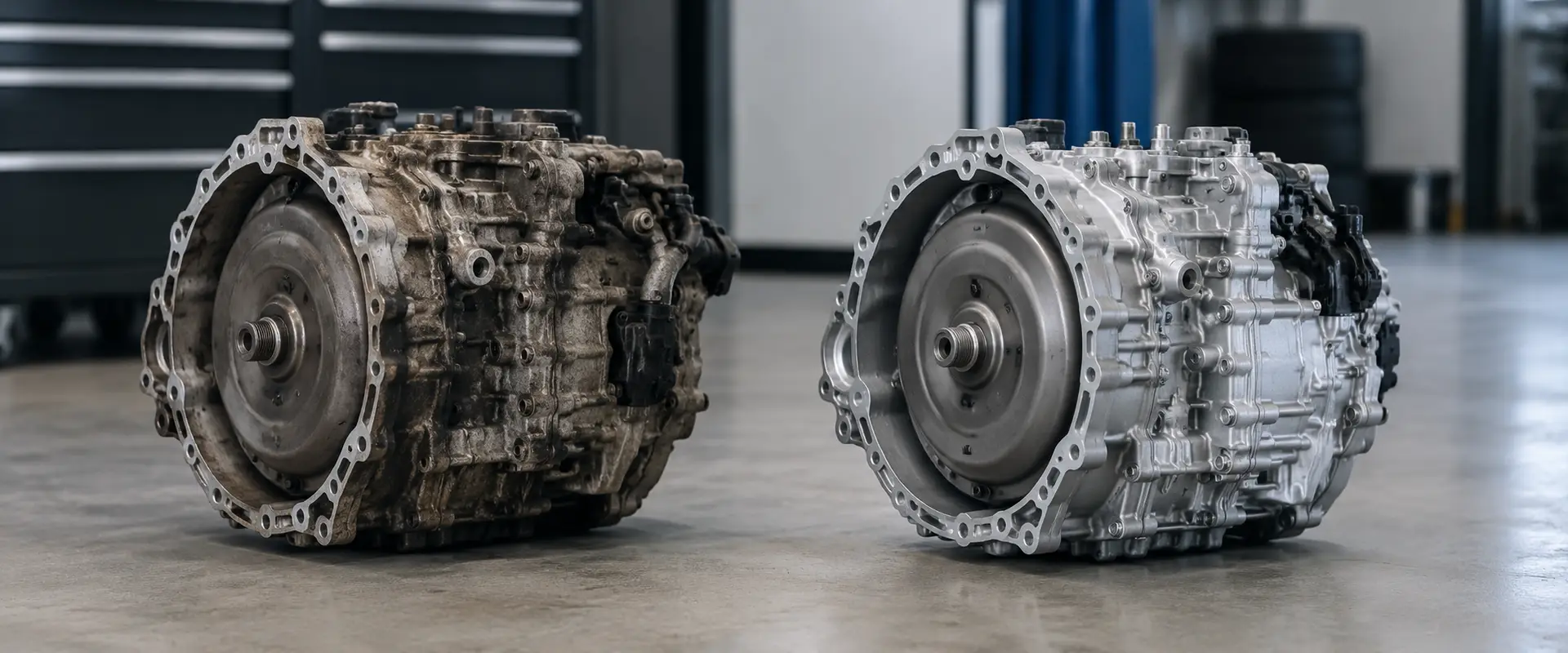
Table of contents
If you have looked at complete CVT transmission listings, you may have seen terms such as “exchange only” or “remanufactured transmission”.
Why does the supplier want the failed transmission back?
Because even a failed transmission can still be a useful core that can be inspected, stripped and used as the foundation for a controlled remanufacturing process.
This guide explains how the exchange system works and what customers and workshops should understand before ordering.
What Is a Transmission Core?
A core is the old transmission removed from the vehicle.
Even if it no longer operates correctly, the assembly may contain reusable structural components and the correct transmission platform for remanufacturing.
Core exchange is common across the automotive industry for engines, transmissions and other major assemblies.
The Remanufacturing Industries Council describes remanufacturing as a controlled process that returns a used or non-functional product to like-new, same-as-new or better-than-new condition from a quality and performance perspective.
That is different from simply removing a transmission from another vehicle and selling it exactly as it came out.
What Does “Exchange Only” Mean?
An exchange transmission is usually supplied on the condition that the old compatible transmission is returned.
The basic process is:
Replacement CVT installed → old CVT removed → old CVT returned as the core.
Returning cores helps maintain the supply of suitable units that can be processed for future customers.
CVT NZ lists complete transmissions in its CVT Transmission range. Always check the conditions attached to the exact unit you need.
Why Is the Old CVT Needed?
A suitable core provides the correct housing and transmission platform required for another remanufactured unit.
A returned core may be:
- Identified
- Inspected
- Disassembled
- Cleaned
- Checked for damaged and reusable components
- Remanufactured to the required standard
- Tested before returning to inventory
What can be reused depends on the condition of the core and the remanufacturing process.
A badly damaged or incomplete core may have less value than a complete recoverable unit.
Remanufactured Is Not the Same as Used
Used Transmission
A used transmission has already operated in another vehicle.
Its history may include unknown factors such as:
- Servicing
- Mileage
- Overheating
- Previous symptoms
- Earlier repairs
- Driving conditions
It may still be usable, but its remaining life cannot be judged from appearance alone.
Remanufactured Transmission
A remanufactured unit has been processed from an existing core rather than simply resold in its current condition.
The useful question for a buyer is not only:
“Is it new or used?”
Also ask:
- What process has the unit gone through?
- What is included?
- What warranty applies?
- Is it supplied on an exchange basis?
Why Core Condition Matters
Not every old transmission is automatically a suitable core.
The supplier may require it to be:
- Complete
- The correct transmission type
- Physically recoverable
- Free from major case damage
- Returned with specified components attached
Exact requirements vary.
Do not dispose of the original transmission before confirming the exchange conditions with the supplier.
If a workshop is removing the old unit, tell them in advance that it may need to be returned.
Make Sure the Exchange Unit Matches the Vehicle
The correct transmission still has to be identified.
Model name alone may not be enough because the CVT can vary by:
- Year
- Engine
- Drivetrain
- Transmission code
- Production variant
CVT NZ’s Transmission Identification Hub can help workshops and buyers identify common transmission codes before ordering.
What Should You Ask Before Buying an Exchange CVT?
What Is Included?
Confirm whether the price covers:
- Supply only
- Supply and installation
- Fluid
- Freight
- Core return
What Warranty Applies?
Warranty can differ depending on the unit and whether CVT NZ supplies or installs it.
See CVT NZ Services for current transmission supply and installation information.
What Must Be Returned?
Ask how complete the old transmission needs to be and whether any components must stay attached.
Who Organises Freight?
For NZ-wide orders, clarify:
- Packaging
- Collection
- Freight cost
- Return timeframe
- Who prepares the old unit
Is Post-Installation Setup Required?
Some vehicles require electronic calibration or learning procedures after a replacement transmission is installed.
That requirement is separate from the physical core exchange and should be checked for the exact vehicle.
How Core Exchange Can Help Workshops
For workshops, an exchange unit can reduce the time a vehicle is waiting while its original transmission is stripped and assessed.
A typical workflow may be:
Identify → order → receive replacement → remove old unit → install replacement → complete required setup → return core.
Availability and requirements vary by transmission, but the exchange model can make difficult CVT jobs easier to plan.
Mechanics who are unsure of the exact transmission can use the Mechanics Transmission Identification Hub before ordering.
What Happens to the Returned Core?
A returned core can stay within the transmission supply cycle instead of the complete assembly being discarded.
That does not mean every internal part is reused.
Components are inspected and the remanufacturing process determines what can be retained and what must be replaced.
The important point for the customer is that the exchange unit should be backed by a clear process, correct identification and appropriate warranty.
Before the Vehicle Goes Into the Workshop
If you are purchasing an exchange CVT, make sure the workshop knows:
- The unit is supplied on exchange
- The original transmission must be retained
- The transmission code has been confirmed
- Core-return conditions
- Freight arrangements
- Any post-installation calibration requirements
- Warranty conditions
Good communication before the work begins can prevent the original transmission being discarded, dismantled unnecessarily or returned incomplete.
Final Thoughts
A failed CVT is not necessarily worthless.
The old transmission can be the core that makes a future remanufactured unit possible. That is why many complete transmissions are supplied on an exchange basis.
Before ordering, confirm the transmission code, exchange conditions, freight arrangements, warranty and installation requirements.
Browse the CVT NZ Transmission range, use the Transmission Identification Hub if you need help identifying the unit, or visit CVT NZ Services for supply and installation information.
- By
- CVT Team
Share this post